
The Anchor & Crew affiliate opportunity is a natural fit for jewellery, menswear, gifts, British design, ethical fashion, and lifestyle publishers. Program access and commercial terms can change, so confirm the current application, eligible markets, attribution rules, and product coverage inside InfluencerRate before publishing any rates or earnings claims.
Want to explore the Anchorandcrew affiliate program?
Create a free InfluencerRate account to discover available brand opportunities and apply.
Join InfluencerRate Already have an account? Log in.
Understand the brand before promoting it
Anchor & Crew is a British accessories house known for bracelets, bangles, necklaces, rings, leather goods, clothing, and art prints. The visual identity mixes nautical references with modern, minimal styling. This gives creators a recognizable story, but useful coverage should go beyond anchors and lifestyle photography to explain materials, construction, sizing, and the reason a piece suits a particular wearer.
Use InfluencerRate's affiliate program directory to review the current route and agreement. Do not copy a commission rate, cookie period, or regional promise from an old coupon page. Treat every commercial parameter as live information. If an application asks how you will promote the brand, show a focused editorial plan rather than a vague promise of social exposure.
Who should apply?
Strong applicants already help people choose accessories or gifts. That includes jewellery reviewers, capsule-wardrobe writers, menswear creators, wedding and anniversary publishers, travel-style channels, sustainable-fashion educators, and gift newsletters. A smaller audience with clear buying intent can be more valuable than broad reach without trust, especially when content answers sizing, materials, care, styling, or delivery questions.
The brand can also suit creators who speak to couples or unisex styling. Build content around an occasion, wardrobe, or design preference instead of assigning every piece to a narrow gender category. A useful application identifies the audience, its location, typical price comfort, and the questions followers ask before buying jewellery online.
Choose content angles with purchase intent
Material and construction explainers
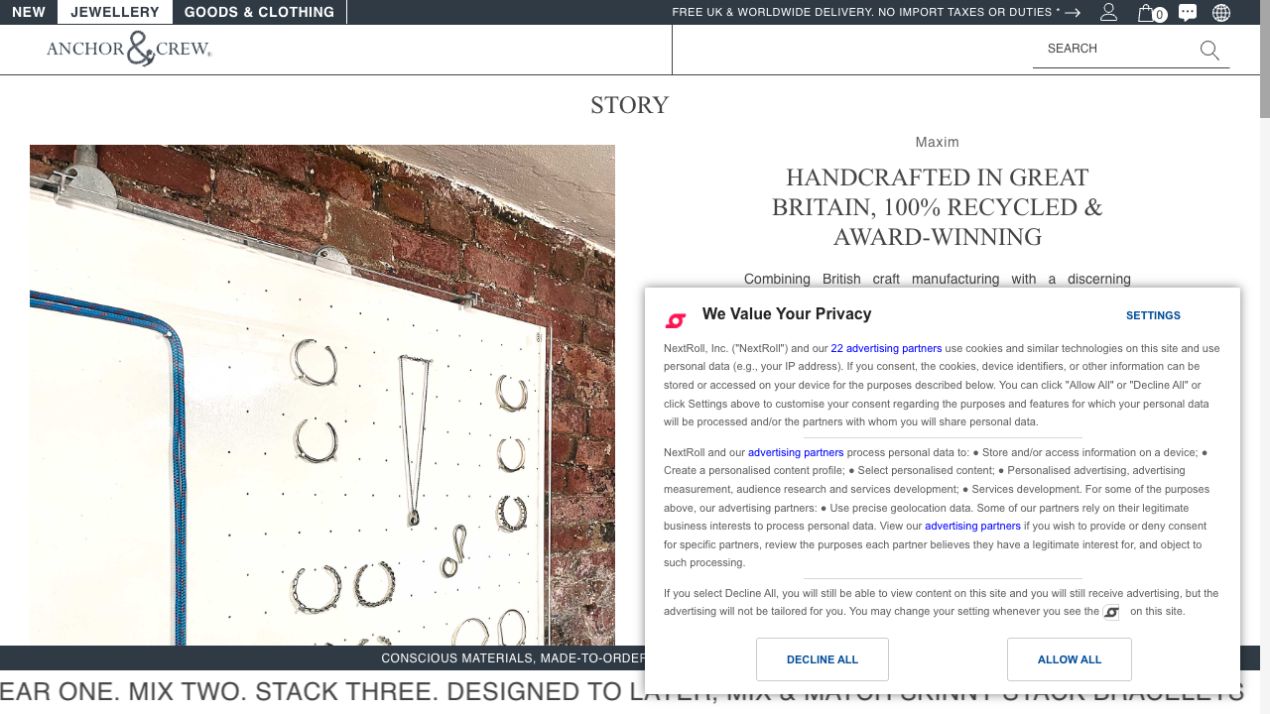
Material-led content can clarify the difference between recycled precious metal, leather, rope, stone, and plated alternatives without implying that one material suits everyone. Inspect the clasp, links, finish, hallmarks, flexibility, weight, and fastening method. Quote only specifications shown on the exact product page, and distinguish brand statements from what you personally observed.
Styling and gifting guides
Styling guides work best when they solve a real decision. Show how bracelet width, metal colour, texture, and layering change the look of an outfit. Gift content can organize ideas by recipient, occasion, personal style, or available time for delivery. Avoid artificial urgency, and check stock plus destination-specific delivery information before recommending a last-minute purchase.
Care, sizing, and long-term wear
Practical ownership content earns repeat search traffic. Demonstrate how you measured a wrist, chose a fit, stored the piece, and followed the official care advice. Record wear over time instead of making a durability claim on day one. Explain that water, cosmetics, friction, and storage conditions can affect different materials in different ways.
Handle sustainability claims precisely
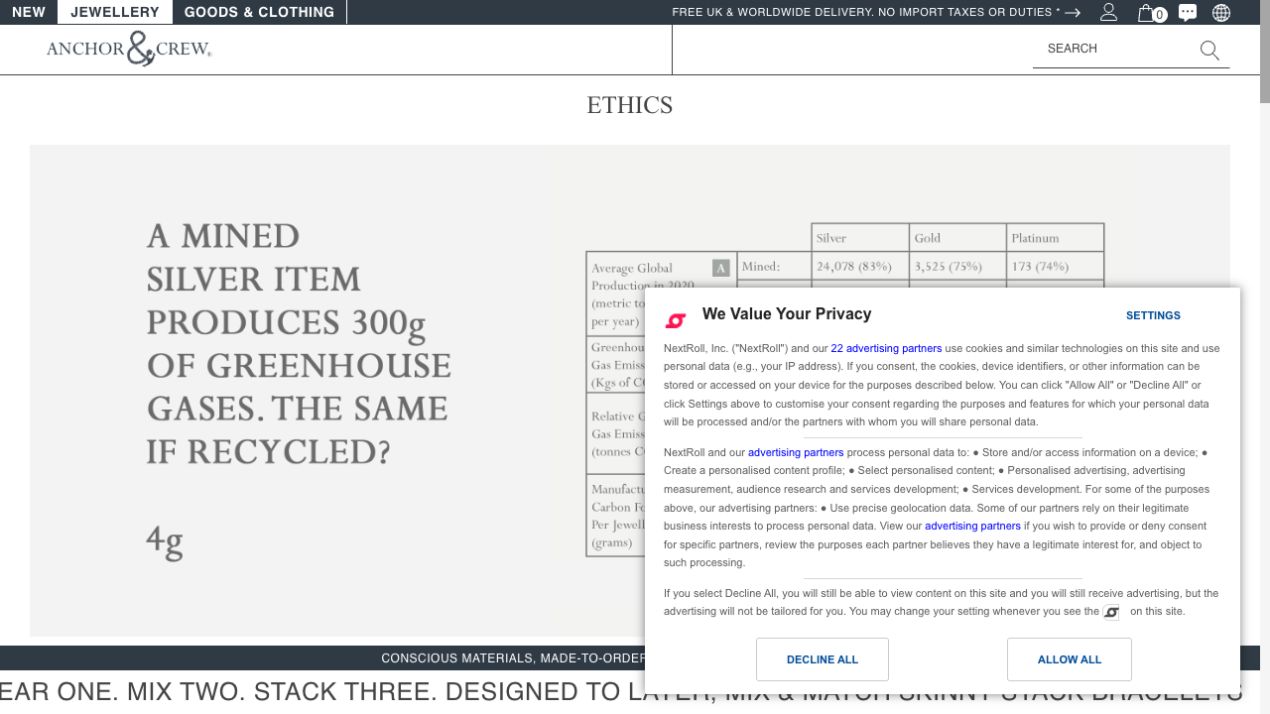
Anchor & Crew places material sourcing and traceability within its brand story. Creators should preserve the exact scope of each statement. A claim about recycled silver does not automatically apply to every component, collection, package, or delivery method. Link readers to the current ethics and traceability page and recheck the individual product description before summarizing it.
Avoid vague phrases such as “completely sustainable” or “guilt free.” Instead, name the material, the item, the evidence supplied by the brand, and any limitation. If you compare brands, apply the same standard to each one. Precise language protects readers and makes the content more credible than a string of unsupported green adjectives.
Create a reliable review method
Before publishing, record the product name, variant, size, materials, packaging, dispatch date, and condition on arrival. Photograph the fastening, finish, hallmark or label, texture, and scale on a real wrist where appropriate. Test comfort during normal wear and note snagging, weight, adjustment, and ease of removal. Do not imply laboratory testing if you only performed a personal wear test.
Separate facts from opinion. “The bracelet weighed this amount on our scale” is observable; “it will last forever” is not. Mention who may prefer a different size, fastening style, or material. If the item was gifted or supplied, disclose that relationship even when no sale occurs. Readers should understand both your evidence and your commercial connection.
Prepare a stronger application
Include your main channels, audience locations, average reach, engagement, and examples of relevant content. Propose two or three specific pieces: a measured sizing guide, a material comparison, a thirty-day wear update, or an occasion-based gift edit. Explain how each item will direct a qualified reader to a relevant collection rather than the homepage alone.
State your promotional methods honestly. If you use email, paid search, coupon content, or product feeds, wait for explicit approval and follow the live agreement. Do not bid on brand terms, create misleading social accounts, or imply that you represent the company. A short, specific compliance note can make an application easier to evaluate.
Measure useful outcomes
Use campaign labels or sub-IDs to separate reviews, gift guides, styling posts, emails, and social placements when available. Monitor click-through rate, conversion rate, product mix, returns, and time to purchase. A styling post may assist a later conversion, while a sizing guide may close the decision immediately. Review landing pages when clicks are strong but orders are weak.
Build supporting pages with an affiliate marketing content strategy. Connect a broad jewellery guide to focused pages about materials, sizing, care, gifts, and individual collections. Update unavailable links and date-stamp meaningful revisions. This structure helps readers move from inspiration to an informed product choice without repetitive promotion.
Disclosure and final verdict
Place a clear affiliate disclosure before the first commercial recommendation. Use plain language that explains you may earn a commission, and retain any platform-specific paid-partnership label. Recheck prices, product details, delivery, and returns when updating a post. Avoid presenting customer reviews as your own experience or claiming a result you did not test.
Anchor & Crew is worth evaluating for creators with a design-aware audience and the ability to explain jewellery choices carefully. The strongest campaigns will pair attractive visuals with material accuracy, measurable sizing, transparent testing, and sensible gift or styling context. Confirm the live opportunity, pitch a narrow plan, and let useful decision support carry the promotion.


