
The 4moms affiliate program is a potential fit for parenting publishers and baby-gear creators who can explain technology-led products with hands-on detail and strong safety discipline. Register with InfluencerRate to inspect the live opportunity, current destination, and application rules before planning content.
4moms is now part of the UPPAbaby family, and the official 4moms site routes shopping and support there. That transition makes current-model verification essential. Do not assume an older directory description, review, video, or product link still represents what shoppers can buy or where they should get help.
Start with the official 4moms website, compare more affiliate program opportunities, and check the CPSC recall database when researching a specific model.
Want to explore the 4moms affiliate program?
Create a free InfluencerRate account to discover available brand opportunities and apply.
Join InfluencerRate Already have an account? Log in.
What kind of products does 4moms make?
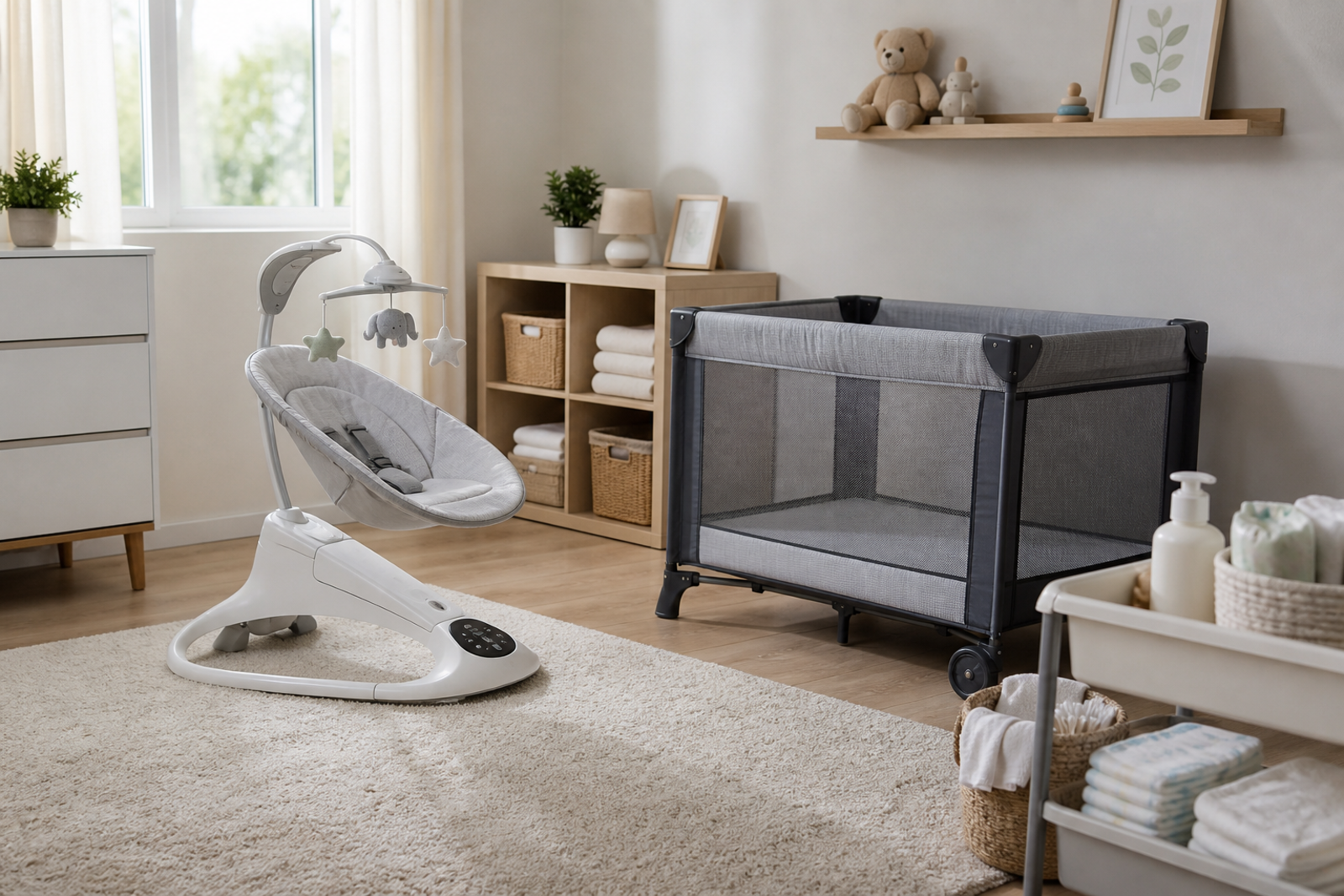
4moms is associated with baby gear that uses motion, compact mechanisms, or other design features to simplify setup and daily routines. Official category language has included infant swings, bassinets, playards, high chairs, tubs, and accessories. The current UPPAbaby collection may not mirror every historical category, so confirm each product before naming it.
This is a category where a feature list is not enough. Parents need to know model identity, intended age or development stage, physical footprint, assembly, cleaning, power requirements, harness use, supervision, and the limits stated in the manual.
Who is a strong fit?
A credible applicant already helps adults make careful baby-gear decisions. Your audience should value demonstrations, comparisons, setup guidance, or registry planning. Relevant trust signals include detailed questions, saves, product-page clicks, newsletter engagement, and a record of correcting outdated information.
- New-parent and baby-registry publishers
- Hands-on gear reviewers with model-specific testing
- Small-space and apartment parenting creators
- Caregiver education channels that follow current instructions
- Accessibility or routine-focused writers who avoid medical claims
The opportunity is a weak fit if you rely on copied retailer footage, hidden sponsorships, or broad claims that a product will solve sleep or soothe every baby. It is also worth waiting if you cannot access the exact model or verify current support information.
Use a model-first review process
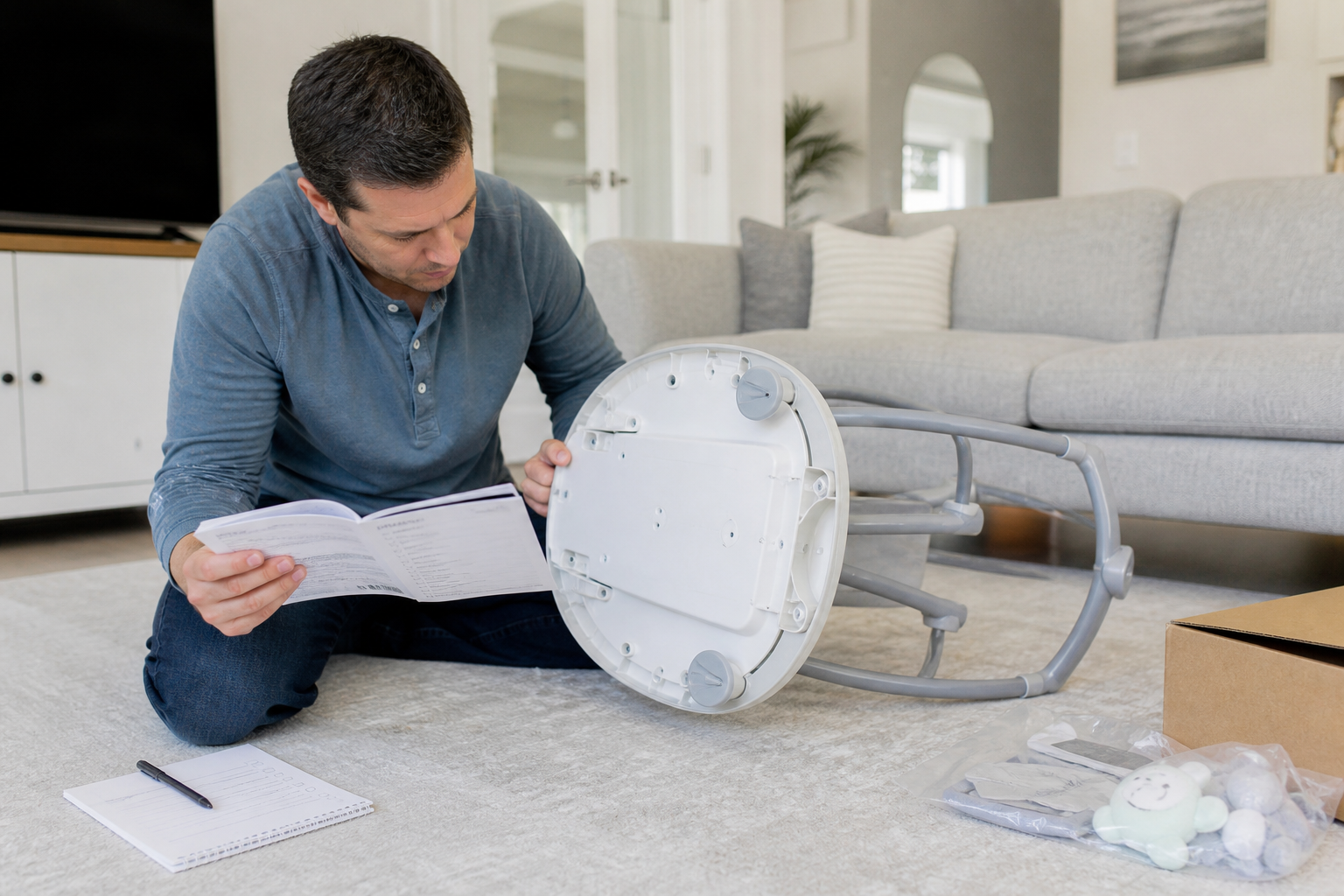
Record the product name, model number, manufacturing details, manual version, and destination before testing. Then compare what the current documentation says with what you can observe. A product family name can span several revisions, and accessories may not be interchangeable.
| Review area | What to verify | Useful evidence |
|---|---|---|
| Identity | Model, revision, included parts, and accessories | Label and current product page |
| Fit | Age, weight, height, or milestone limits | Current manual and warnings |
| Setup | Assembly, floor clearance, power, and stability | Continuous setup demonstration |
| Use | Harness, supervision, duration, and prohibited uses | Manual-led walkthrough |
| Care | Removable parts and cleaning instructions | Documented cleaning test |
| Status | Support route and any safety notices | Official support and CPSC search |
Content formats parents can use
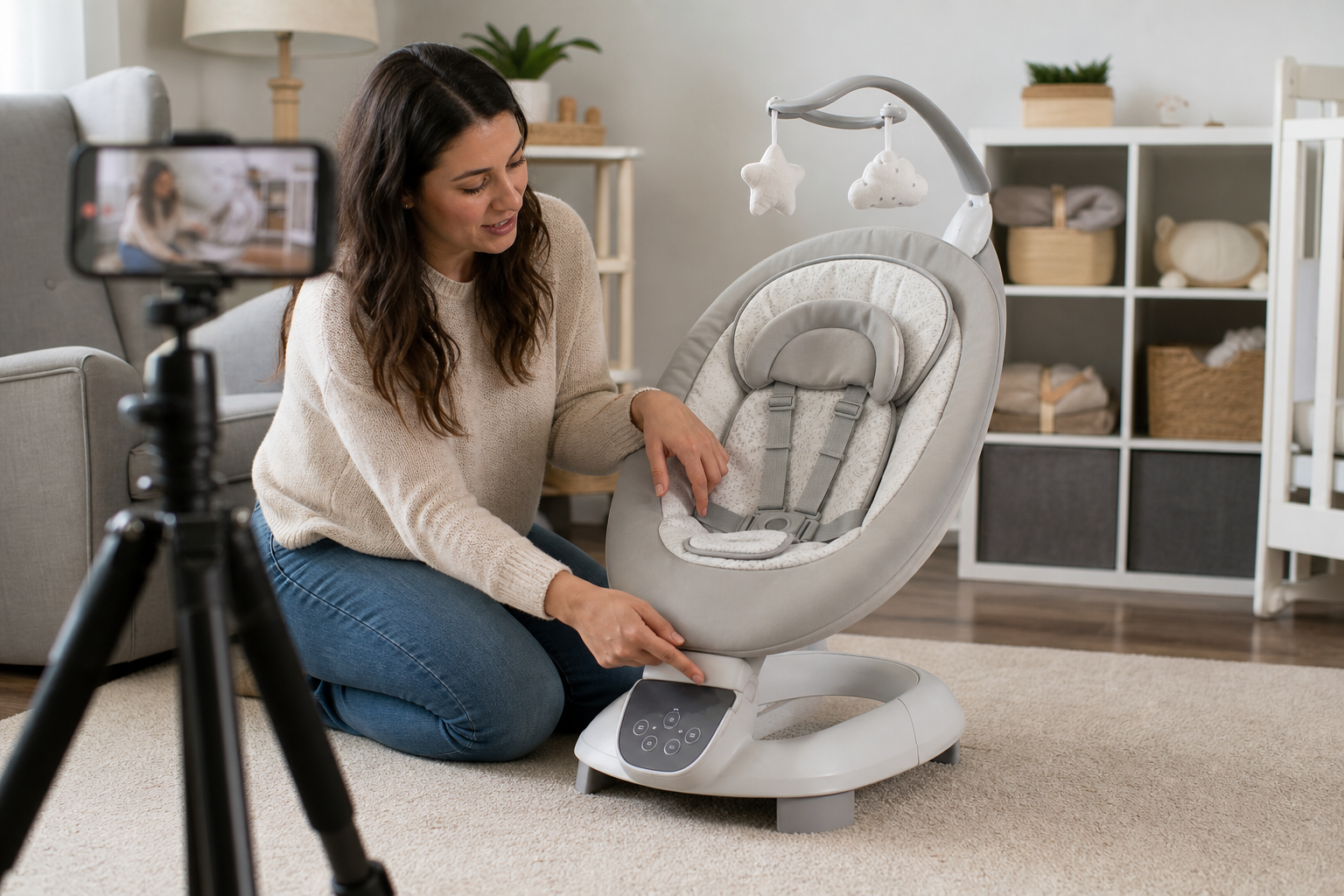
Setup and footprint demonstration
Show the unopened parts, assembly sequence, cord management, occupied floor space, controls, and how the product moves or folds. Keep the model label private if it contains a serial number. Note any step that required a second person or a reread of the manual.
Routine-based comparison
Compare two products around a real question, such as portability, cleanup, noise, small-space fit, or caregiver operation. Use the same criteria for both. Avoid declaring one universally best when family space, budget, baby stage, and routine differ.
Cleaning and maintenance guide
Demonstrate what removes, what can be washed, drying time, crevices, and reassembly using the current instructions. Cleaning content stays useful after launch excitement fades and helps a reader estimate ownership effort.
Keep safety and sleep claims precise
Never imply that an affiliate relationship, smart feature, or motion setting overrides supervision and current product instructions. Distinguish an infant swing or seat from a sleep space, and do not improvise pillows, blankets, inserts, restraints, or positioning. If a child appears, demonstrate only a permitted use and minimize identifying information.
Check the official manual, support page, and authoritative recall sources immediately before publication. If they conflict with your old content, update or remove the old statement. A disclosure explains the commercial relationship; it does not make an inaccurate safety claim acceptable.
Prepare a stronger application
Show that you can educate parents and maintain model-specific information. Select examples with original testing, clear sponsorship labels, and balanced tradeoffs. A reviewer should see both audience relevance and the operational habits needed for high-consideration baby products.
- Define your buyer. Describe the parent stage, home context, and decisions your audience is making.
- Share hands-on work. Provide setup, comparison, registry, or maintenance examples.
- Explain verification. State how you check models, manuals, warnings, support pages, and recalls.
- Propose two assets. Use one detailed guide and one short demonstration instead of generic promotion.
- Show disclosure practice. Link to examples where the relationship is clear before or near recommendations.
Verify the live opportunity before publishing
Open the current 4moms opportunity in InfluencerRate and confirm which destination, products, channels, and actions are covered. Do not publish old commission rates, cookie windows, payout details, product-seeding promises, or program status from a directory or case study.
- Confirm your region, audience, channel, and traffic methods are eligible.
- Check rules for social, email, paid search, coupons, and brand bidding.
- Verify the tracked URL points to the intended current product route.
- Review current creative, naming, disclosure, and comparison requirements.
- Confirm how returns, cancellations, or product changes affect reporting.
- Record the review date and revisit evergreen posts after catalog changes.
Plan a focused first campaign
Choose one current model and one parent decision. Publish a manual-led setup guide, a short empty-product demonstration, and a concise fit checklist. Add the affiliate disclosure and link only after the reader understands the use case, limits, and current destination.
Measure engaged reading, saves, model-specific questions, qualified clicks, and validated outcomes where available. If readers watch but do not click, add decision detail. If clicks do not continue, check destination accuracy, availability, pricing context, and whether the product genuinely fits your audience.
Next step
If parents trust your baby-gear reviews, gather your strongest hands-on examples and a current-model verification plan. Register with InfluencerRate, inspect the live 4moms opportunity, confirm the UPPAbaby destination and rules, and apply with a campaign built around careful evidence.


