
The 7shifts affiliate program is designed for publishers, consultants, and restaurant educators who can introduce team-management software to qualified operators. Register with InfluencerRate to inspect the live opportunity, then confirm the current application route, eligibility, tracked action, and promotion rules.
Want to explore the 7shifts affiliate program?
Create a free InfluencerRate account to discover available brand opportunities and apply.
Join InfluencerRate Already have an account? Log in.
The current official application asks who you are, who your audience is, and how you plan to promote 7shifts. That makes restaurant relevance and a specific content plan more important than generic software reach. Historical directories disagree on network, payout, cookie, and approval details, so verify every commercial field live.
Review the official 7shifts affiliate application, compare more affiliate program opportunities, and use the US Department of Labor state contacts when pointing US operators toward authoritative wage-and-hour information.

What is 7shifts?
7shifts is a restaurant team-management platform centered on scheduling and communication. Depending on the active plan and configuration, teams may use it for schedules, availability, time-off requests, shift swaps, messages, time tracking, payroll workflows, task management, or integrations.
Do not present every feature as available to every buyer. Restaurant location, plan, payroll market, point-of-sale system, permissions, and setup all matter. A creator’s job is to help an operator identify which workflow to test and what evidence to collect.
Choose the correct relationship
7shifts distinguishes affiliates from referral, reseller, accountant, and integration partners. An affiliate publishes tracked recommendations to an audience. A consultant sending named clients, an accountant managing customer accounts, a software company building an integration, or a business reselling the platform may need a different relationship.
Describe your actual business model in the application. Do not select an affiliate route merely because it looks faster. A precise explanation of audience, content, and handoff helps the reviewer align you with the appropriate program.
Who is a strong creator fit?
The strongest applicants already speak to restaurant owners, general managers, operators, franchise teams, accountants, hospitality consultants, or restaurant technology buyers. They understand that a weekday café, a late-night bar, and a multi-location quick-service group have different scheduling pressures.
- Restaurant operations newsletters and podcasts
- Hospitality consultants with educational content
- Restaurant accounting, payroll, or labor-cost educators
- Point-of-sale and restaurant technology reviewers
- Former operators teaching managers and owners
The opportunity is a weak fit for broad productivity content with no operator access. It is also unsuitable if your proof depends on exposing employee names, availability, wages, messages, time records, or disciplinary information.
Build a restaurant-specific evaluation
Start with a fictional or fully authorized test location. Define concept, service model, operating hours, roles, headcount, locations, peak periods, manager permissions, employee access, current point of sale, and payroll process. Then select one painful workflow rather than trying to demo the entire platform.

| Workflow | Test scenario | Useful evidence |
|---|---|---|
| Schedule build | One week across realistic roles and service periods | Manager steps, conflicts, and publish process |
| Availability | Fictional employee changes a recurring limit | Submission, visibility, and approval behavior |
| Shift swap | A server offers a shift with a deadline | Eligibility, notifications, and manager control |
| Time off | Two requests overlap a peak weekend | Request history and decision workflow |
| Communication | A service update targets one location or role | Audience, delivery path, and acknowledgment |
| Integration | Connect a supported test system | Prerequisites, field mapping, and failure checks |
Content formats that earn operator trust
Before-and-after workflow
Document the old process without manufacturing dramatic savings. Count schedule-building steps, correction loops, manager handoffs, employee questions, and time spent during a representative period. Then run the same scenario in the configured software and report what changed.
Role-based walkthrough
Show the same event from manager and employee perspectives using fictional accounts. A shift swap, availability change, or time-off request is more meaningful when viewers can see permissions, notifications, and approval boundaries on both sides.
Implementation diary
Record setup decisions, data preparation, role mapping, training, pilot location, and rollout checks. Include friction and prerequisites. A careful implementation diary helps buyers judge effort better than a polished feature montage.
Protect employee data and compliance boundaries
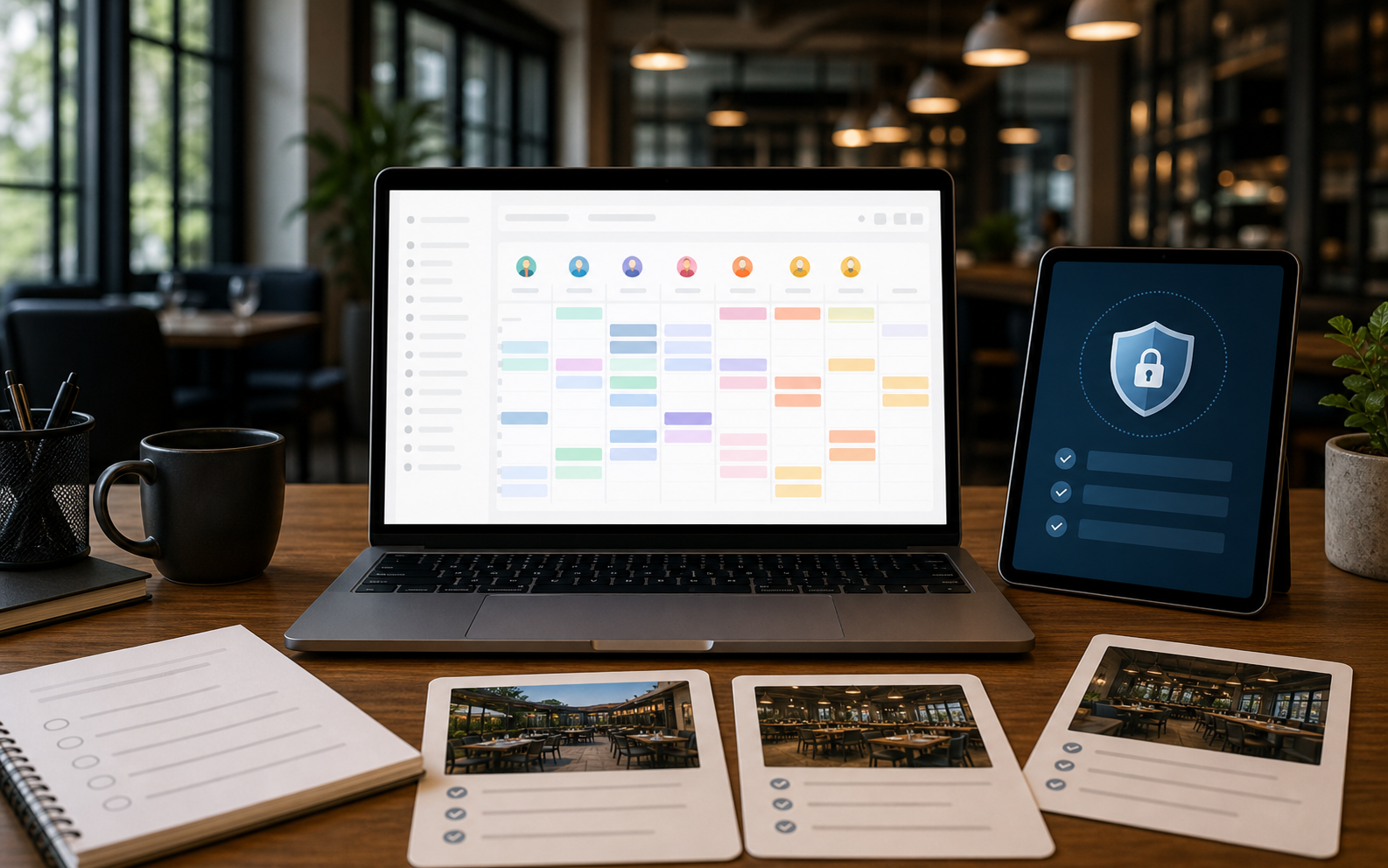
Use synthetic names, schedules, wages, availability, messages, and locations in public demos. If a real restaurant participates, obtain appropriate authorization, minimize what is shown, remove identifiers, and follow the restaurant’s privacy and security process. Blurring after recording is not a substitute for collecting less data.
Do not claim that software guarantees compliance, accurate payroll, lower labor cost, better retention, or fewer no-shows. Local laws, collective agreements, policies, configuration, approvals, and human review still govern outcomes. Describe the feature you observed and direct operators to qualified legal, payroll, or HR advice for their situation.
Prepare a credible application
Your application should answer the questions the official form emphasizes: who you are, who you reach, and how you will work with 7shifts. Provide evidence that your audience includes restaurant decision-makers and that your content can move beyond a generic product list.
- Define the operator. State concept, role, locations, geography, and common team-management problem.
- Share relevant work. Link to restaurant operations, payroll, technology, or workforce content.
- Outline one demo. Name the workflow, fictional data, test steps, and distribution plan.
- Explain safeguards. Cover disclosures, permissions, employee data, compliance language, and corrections.
- Show measurement. Include qualified visits, demo interest, operator questions, and validated outcomes where available.
Verify the live opportunity
Open the current 7shifts opportunity in InfluencerRate before applying and again before publishing. Confirm the approved relationship type, audience and region, destination, qualifying action, attribution terms, creative rules, and permitted traffic. Do not reuse commercial parameters from a historical directory.
- Check channel, geography, and restaurant-audience eligibility.
- Review rules for email, social, video, paid media, coupons, and brand terms.
- Test the tracked destination and application handoff.
- Verify current plans, features, integrations, payroll market, and support routes.
- Record the check date and update comparisons after material product changes.
For a broader disclosure and link-management workflow, review InfluencerRate’s guide to affiliate marketing.
Plan the first campaign
Begin with one restaurant persona and one workflow, such as a single-location café moving availability and shift swaps out of text messages. Publish a decision guide, a fictional-data walkthrough, and an implementation checklist. State assumptions, disclosures, and the date of each feature check.
Measure qualified operator clicks, demo requests, implementation questions, and validated outcomes where available. If interest is high but handoff is weak, inspect the destination and relationship type. If viewers misunderstand the workflow, improve the scenario and permission explanation before increasing promotion.
Next step. Gather your strongest restaurant-operations examples and one testable campaign brief. Register with InfluencerRate, inspect the live 7shifts opportunity, confirm current terms, and apply with a plan built around operator fit, defensible evidence, and safe demo data.


