
The 32 Degrees affiliate opportunity can suit apparel, value-fashion, travel, fitness, and everyday-style creators who help people choose practical layers and basics. Start by checking the current opportunity through InfluencerRate, then confirm the live application path and partner terms available to you. Rates, attribution rules, eligible products, and promotional restrictions can change, so build your strategy around useful clothing content rather than a temporary program number.
Confirm the current route on the official 32 Degrees store, compare more affiliate program guides, and review FTC disclosure guidance before publishing.
Want to explore the 32degrees affiliate program?
Create a free InfluencerRate account to discover available brand opportunities and apply.
Join InfluencerRate Already have an account? Log in.

Is 32 Degrees a Good Fit for Your Audience?
32 Degrees is associated with accessible apparel such as lightweight outerwear, insulated jackets, performance layers, casual tops, and everyday basics. That mix gives creators several useful entry points: changing-weather wardrobes, travel packing, work-from-home comfort, light activity, and affordable outfit building.
The opportunity is strongest when your audience already asks practical questions. They may want to know whether a base layer feels comfortable under a jacket, whether a tee is opaque in daylight, whether joggers restrict movement, or which size leaves room for layering. Those questions are more valuable than a generic statement that an item is comfortable.
Likely creator fits include:
- Everyday-style publishers who show repeatable outfits rather than one-time trend hauls.
- Budget-conscious reviewers who compare function, construction, and cost without treating low price as proof of value.
- Travel creators who test packability, outfit repetition, temperature changes, and care on the road.
- Fitness and walking creators who can discuss movement, layering, and moisture during the activity they actually performed.
- Family or practical-living publishers who help readers build simple wardrobes around real routines.
It may be a weak match if your channel depends entirely on luxury positioning, if your audience rarely buys apparel online, or if you cannot demonstrate garments responsibly. A large following does not fix a mismatch between audience intent and the products being promoted.
Choose a Problem, Not a Pile of Products
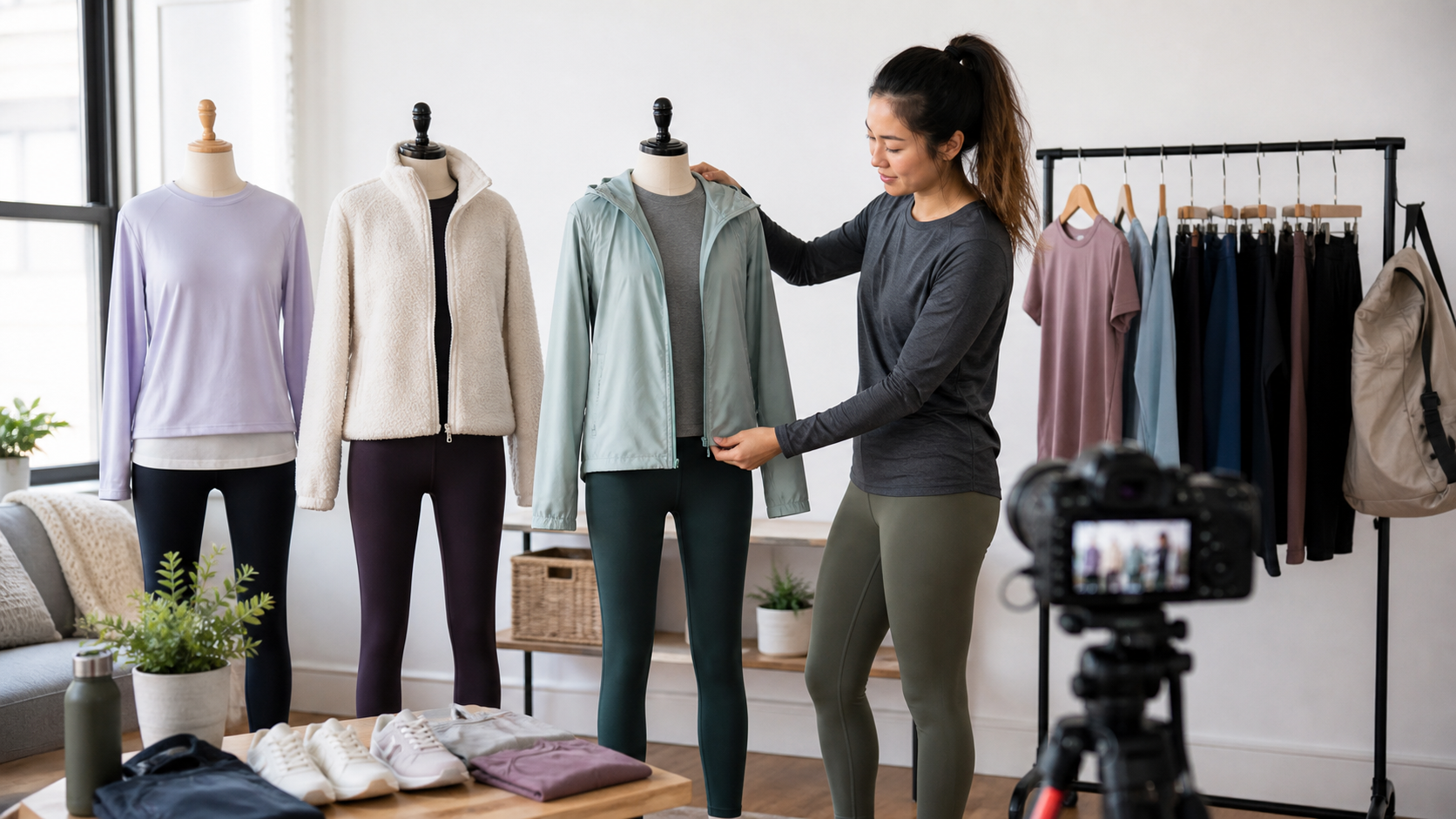
A broad catalog can tempt creators into an unfocused haul. Instead, start with one recurring wardrobe problem. You might test a three-layer system for a cool commute, compare two base layers under the same jacket, build a compact weekend packing list, or explain how to evaluate lounge basics for long workdays.
Use four filters before adding a product to your content plan:
- Audience relevance: Does the garment answer a question people already bring to your channel?
- Testability: Can you show fit, movement, fabric behavior, care, or layering without guessing?
- Distinct role: Does it add a function that another item in the story does not already provide?
- Maintainability: Can you revisit sizing, availability, links, and claims when the catalog changes?
This method keeps the content useful when a color sells out or a promotion ends. The lasting value is your decision framework; the garment is the current example.
Build an Apparel Test Readers Can See
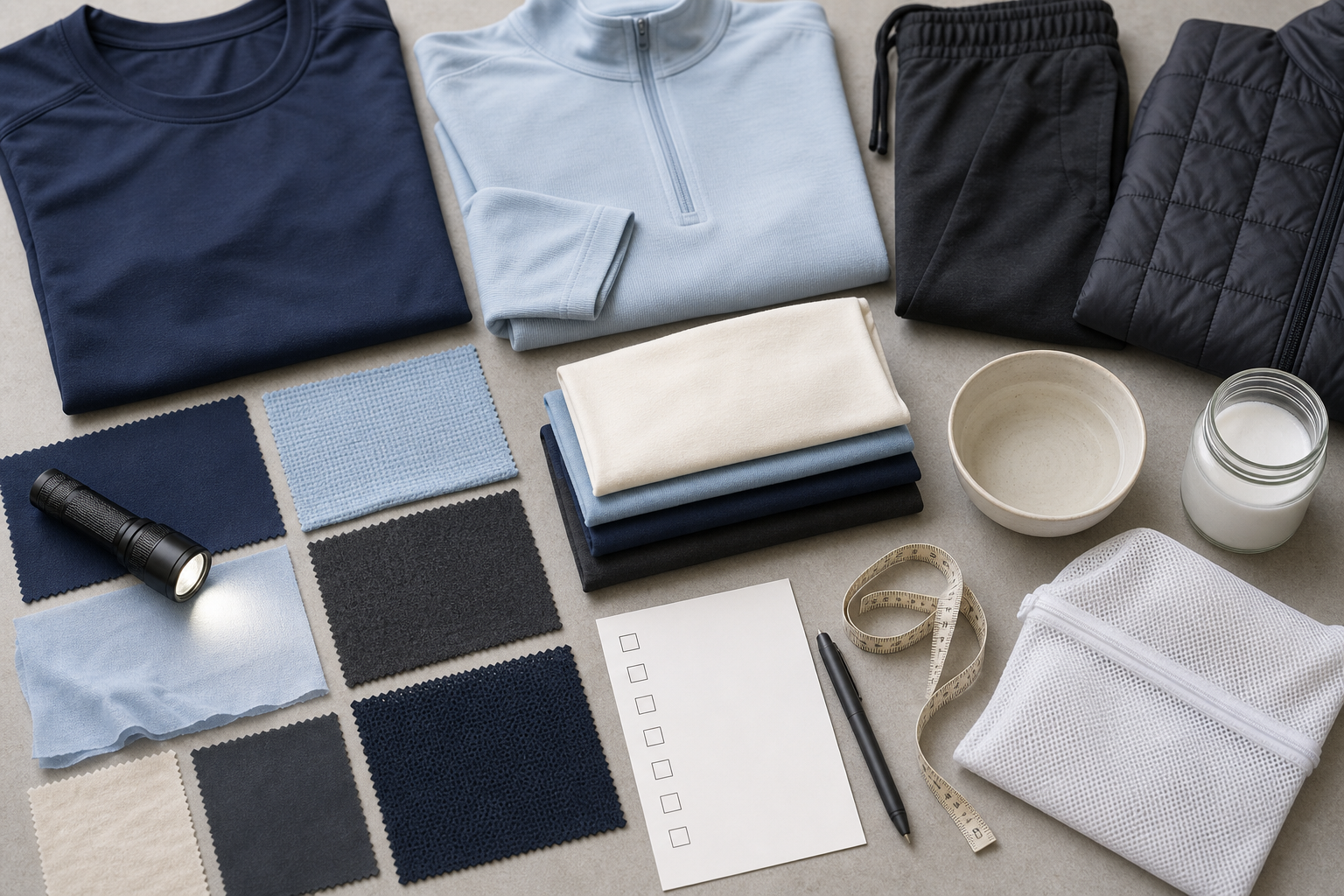
Clothing is subjective, but your testing does not have to be vague. Define the wearer, size selected, relevant body measurements, intended use, weather, layers underneath, and length of use. Do not imply that one person's fit will be universal.
| Check | Useful evidence | Avoid claiming |
|---|---|---|
| Fit | Garment measurements, wearer context, sleeve and body length, rise, and layering room | That a size will fit everyone with a similar label |
| Comfort | Seam placement, stretch, waistband behavior, and how it felt during a named activity | All-day comfort after a brief try-on |
| Opacity | Daylight and indoor-light checks with the garment relaxed and stretched appropriately | Universal coverage under every light and color |
| Movement | Reach, bend, sit, walk, or workout motions relevant to the product | Performance in an activity you did not test |
| Warmth | Temperature, wind, duration, base layers, and activity level | A fixed temperature rating from personal feeling alone |
| Care | Label instructions, wash method, drying method, measurements, and appearance afterward | Long-term durability after one wash |
Record drawbacks with the same care as strengths. A thin fabric can be useful for layering but less suitable as a standalone light-colored top. A close cut may work under outerwear but feel restrictive to someone who prefers relaxed fits. Context turns a limitation into a helpful choice instead of a dramatic verdict.
Prepare a Credible Application
Your application should connect your audience, evidence, and publishing plan to the apparel catalog. Prepare a compact package before you apply:
- A one-sentence audience description covering location, interests, and primary content format.
- Two or three examples of fit guidance, outfit explanation, product testing, or honest comparisons.
- Representative performance measures such as search visits, video retention, saves, replies, newsletter clicks, or shopping-intent comments.
- Two proposed 32 Degrees content concepts with a specific audience problem and testing method.
- Your publishing cadence and process for checking links, availability, and changing claims.
- Your disclosure approach and a short explanation of how you correct errors.
Choose examples that show consistent relevance instead of relying on a single viral post. New creators can compensate for limited reach with clear positioning, careful samples, and a realistic production plan. Never invent sales history, product use, audience location, or previous brand work.
Verify the Current Terms Before Publishing
Current third-party listings do not present the 32 Degrees opportunity in exactly the same way. Some show specific commercial figures, some gate details behind registration, and others list multiple possible access paths. That variation is a reason to verify, not a reason to average the numbers or choose the most attractive claim.
In the live application and approved dashboard, check the merchant identity, eligible markets, commission rules, attribution window, excluded products or orders, return adjustments, payout conditions, and allowed promotional methods. Confirm rules for coupons, email, paid ads, brand bidding, social platforms, and direct linking. Save a dated copy of the terms you accept.
Avoid placing volatile figures in an evergreen title or introduction. If you publish a current term because it materially helps the reader, include the date checked and maintain the page. Do not promise approval, earnings, or tracking on every order.

Plan a Focused First Campaign
Start with one audience problem, a small product set, and one primary content asset. A strong first campaign might be a lightweight layering guide with a short companion video, or a fit-and-care review supported by an email that answers one common sizing question.
Decide what success means before publishing. Saves and repeat visits can indicate wardrobe-planning value. Questions reveal information you missed. Outbound clicks suggest shopping interest but do not prove satisfaction. Use the reporting available in your approved partner dashboard, allow for cancellations and returns, and compare results with the quality of on-page engagement.
For your next test, change one meaningful variable: the use case, opening question, evidence format, or audience segment. Keep a log of what changed. This produces clearer learning than publishing many unrelated links at once.
Disclose Clearly and Protect Reader Trust
Place a plain-language affiliate disclosure where readers or viewers will encounter it before acting on a recommendation. Repeat it when a social post, short video, email, or embedded module can appear separately from the main article. If a product was gifted or discounted, disclose that relationship too.
Separate observation from product-page information. Say what you wore, washed, measured, and compared. Attribute material or care statements that come from the seller, and avoid translating a feature into a performance promise you did not test. Correct meaningful errors visibly and update or remove recommendations that no longer meet your standard.
Responsible apparel content also helps people decide not to buy. Suggest measuring a favorite garment, checking an existing wardrobe, or choosing a more suitable layer when appropriate. The restraint that reduces an unnecessary click today can build the trust behind many informed decisions later.
